Professional jigsaws
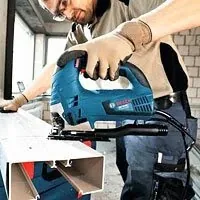
I have spent two decades cutting through everything from thin plywood to thick oak beams. Most guys buy a jigsaw because it is cheap, but professionals use them for specific, tight tasks. You need to know when to grab the saw and when to reach for the table saw instead.
Choosing the right motor
Corded models generally offer more consistent power for heavy cuts. If you are cutting through 2-inch thick hardwood, a cordless tool might bog down halfway through the board. I prefer a corded unit with at least 5 or 6 amps of power to keep the blade moving steadily.
Battery life varies too much. You cannot rely on it during a long day in the shop.
Look for orbital action settings on the side of the tool. This feature moves the shoe in a circular motion to speed up rough cuts in softwoods like pine. It works well, but it leaves a very rough edge that requires heavy sanding later. Switch it off when you move to hardwoods or plywood.
Speed control is another factor. A saw without variable speeds will burn through delicate walnut veneer if you aren't careful.
Blade selection and physics
The blade does the actual work, not the motor. Most beginners use the cheap blades that come in the box, but those are almost useless for anything beyond basic construction lumber. I always keep a pack of Bosch T-shank blades specifically designed for fine wood cutting in my toolbox.
Blade tooth count matters immensely. A 10 TPI (teeth per inch) blade is great for quick, rough shapes in 2x4s. For clean cuts in 18mm Baltic Birch, you need at least 20 or 24 TPI to prevent the wood from splintering on the bottom edge.
Watch your blade deflection. Thin blades bend when they hit a knot, which ruins your straight line and creates a curved cut. Use a thicker blade if you want better stability in thick stock.
Managing the baseplate
The metal shoe or baseplate must stay flat against the wood at all times. If you tilt the saw even slightly during a curve, the blade will wander and create an uneven edge. I often use blue painter's tape on my workpieces to mark my path more clearly.
Some high-end models allow you to adjust the bevel angle. This is helpful for cutting angled joints, but it can feel wobbly if the locking mechanism is cheap. Check the tightness of that adjustment before you start your cut.
Avoid lifting the saw mid-cut. This creates a notch in the wood that ruins the finished surface.
Cutting techniques for accuracy
Always support your workpiece properly. If the end of the board hangs off the table, it will vibrate and cause the blade to wander or snap. I use sawhorses or a dedicated workbench to keep everything steady during the process.
Work at a steady pace. You should move the saw fast enough to avoid burning the wood but slow enough that the motor doesn't stall out. If you hear the RPMs drop significantly, stop and let the tool catch up.
Sand the edges immediately after cutting. This removes any minor splintering caused by the blade exit.
Frequently asked questions
Should I use a jigsaw for straight lines?
No, it is a poor choice for long, perfectly straight rips. A circular saw or a track saw will give you much better results for those tasks. Use the jigsaw only when you need to follow a complex curve or an irregular shape that a larger tool cannot reach.
How often do I change the blades?
Change them when they feel dull. If you see smoke or hear a high-pitched screaming sound, the blade is dead. A dull blade wastes energy and makes the job much harder than it needs to be.
Can I cut metal with a wood jigsaw blade?
Do not try this with standard wood blades. You will ruin the teeth in seconds and potentially damage the motor. Buy specific metal-cutting blades that have finer, more heat-resistant teeth if you need to make small cuts in thin steel.
Frequently asked questions
Should I use a jigsaw for straight lines?
No, it is a poor choice for long, perfectly straight rips. A circular saw or a track saw will give you much better results for those tasks. Use the jigsaw only when you need to follow a complex curve or an irregular shape that a larger tool cannot reach.
How often do I change the blades?
Change them when they feel dull. If you see smoke or hear a high-pitched screaming sound, the blade is dead. A dull blade wastes energy and makes the job much harder than it needs to be.
Can I cut metal with a wood jigsaw blade?
Do not try this with standard wood blades. You will ruin the teeth in seconds and potentially damage the motor. Buy specific metal-cutting blades that have finer, more heat-resistant teeth if you need to make small cuts in thin steel.