Cordless jigsaws
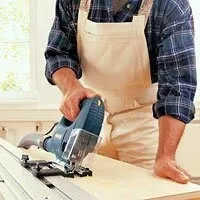
I have spent two decades cutting curves in everything from thin plywood to thick oak butcher blocks. In the early days, my shop relied entirely on corded tools that required hunting for an outlet every ten minutes. Transitioning to cordless models changed how I approach site work and quick cuts. You need to understand what you are buying before you drop $250 on a single tool.
Battery life and runtime
Batteries dictate your workflow. If you use a 4.0Ah battery, you might get twenty minutes of continuous cutting in dense hardwoods like walnut. Small 2.0Ah packs feel light but die quickly during heavy tasks. I always keep two spare batteries on my workbench at home.
Don't trust the gauge blindly. A battery might show three bars, yet it loses torque the moment you hit a knot in a piece of pine.
Blade selection and stability
A jigsaw is only as good as its blade. Most manufacturers include cheap, generic blades that bend under pressure. I buy Bosch T-series blades for every job because they hold their shape better when cutting 18mm MDF. A cheap blade will wander, ruining your straight lines.
The orbital action setting matters too. High orbital settings speed up the cut in softwoods but make fine detail work nearly impossible on hardwoods. Set it to zero for precision.
Managing vibration and dust
Vibration kills your hands. Cheap motors shake violently after about ten minutes of heavy use, which leads to fatigue during long sessions. I prefer models with a balanced reciprocating mass to keep the tool steady in my grip.
Dust management is often ignored by beginners. Most cordless jigsaws have a small plastic shroud that catches some chips, but you still need a vacuum attachment for clean shop work.
Weight and ergonomics
Balance is everything. A heavy battery on the bottom can make the tool feel nose-heavy during delicate curves. I tested a DeWalt model in 2021 that felt perfectly centered despite the large 5.0Ah pack attached to it.
Hold it correctly. You should be able to control the baseplate with your non-dominant hand while guiding the trigger with your dominant one.
Frequently asked questions
How do I stop the blade from bending?
Pressure is the main culprit here. If you push too hard against the wood, the thin steel will flex and create a slanted cut. Let the motor do the work instead of forcing it through the material.
Can I use these for metal?
Yes, but you need specific blades. Use a high-TPI (teeth per inch) blade designed specifically for thin sheet metal to avoid snapping the teeth off.
Why is my cut not straight?
Check your baseplate first. If the shoe is slightly bent or if you aren't applying even pressure along the entire edge, the saw will drift away from your line.
Frequently asked questions
How do I stop the blade from bending?
Pressure is the main culprit here. If you push too hard against the wood, the thin steel will flex and create a slanted cut. Let the motor do the work instead of forcing it through the material.
Can I use these for metal?
Yes, but you need specific blades. Use a high-TPI (teeth per inch) blade designed specifically for thin sheet metal to avoid snapping the teeth off.
Why is my cut not straight?
Check your baseplate first. If the shoe is slightly bent or if you aren't applying even pressure along the entire edge, the saw will drift away from your line.