Jigsaws for Circular Jigsaws
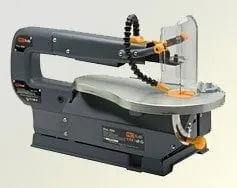
I have spent two decades cutting curves in everything from thin plywood to thick oak slabs. Most people think a jigsaw is just a tool for rough cuts. They are wrong. If you use the right blades and steady your hands, you can get surprisingly clean results on curved work.
Choosing the Right Blade
The blade determines your success. Cheap blades bend easily. When I cut a tight radius in 18mm Baltic Birch, a flimsy blade will wander off my line almost immediately. You need T-shank blades with high tooth counts for fine work.
Look for a blade with at least 10 TPI (teeth per inch) if you want to avoid jagged edges on the underside of your wood. Cheap steel lacks the heat resistance needed for long runs through hardwoods like maple or walnut. I prefer using Bosch T144A blades for my general curves because they hold their shape well under pressure.
The blade must be stiff. A thin, flexible blade is a recipe for frustration.
Managing Blade Wander
Blade wander ruins your accuracy. This happens when the bottom of the cut doesn't match the top. It often occurs because the user pushes too hard against the wood or uses a blade that is too thin for the material thickness.
Keep your speed consistent. I find that slowing down my forward movement by about 25% helps prevent the motor from overheating and keeps the cut straight. If you feel the saw vibrating excessively, stop immediately. You are likely forcing the tool into a curve that is too tight for your current blade width.
Hold the tool firmly. Use both hands if your model allows it to maintain better control over the cutting path.
Supporting Your Workpiece
Never cut a piece of wood that is floating in mid-air. This causes the wood to vibrate or sag, which snaps blades and creates ugly, uneven edges. I always use a sacrificial piece of 12mm MDF underneath my actual workpiece.
This extra layer provides a solid surface for the blade to pass through without tearing the bottom fibers of your project wood. Clamp your work firmly to a workbench using at least two heavy-duty F-clamps. If the wood moves even a millimeter during a cut, you will end up with a ruined edge that requires hours of sanding.
Stability is everything. A moving workpiece is a dangerous workpiece.
Sanding and Finishing
A jigsaw rarely leaves a perfect edge. You must plan for sanding time after every single cut. I always leave about 2mm of extra material on my layout lines to account for the slight inaccuracies inherent in jigsaw cutting.
Use a random orbital sander starting with 80-grit sandpaper to flatten the edge. Once the shape is smooth, move up to 120-grit and then 180-grit to prepare the surface for finish. If you try to jump straight to fine grits, you will leave deep scratches from the jigsaw teeth that show up clearly under a clear coat of polyurethane.
Take your time. Sanding is where the real shape emerges.
Frequently asked questions
Can I cut metal with a wood jigsaw?
You can if you change the blade. Standard wood blades will dull or snap instantly against steel. Buy specific metal-cutting T-shank blades and run your saw at a much lower speed to avoid overheating the teeth.
How do I make a perfectly straight cut?
Use a guide rail or a straight edge. Clamp a level or a factory-edge piece of scrap wood to your workpiece to act as a fence for the side of the jigsaw. This method works better than trying to hand-eye a straight line.
Why does my saw smell like smoke?
Your blade is likely dull or you are moving too fast. Friction creates heat, and that heat burns both the wood fibers and the internal motor components. Stop cutting and check your blade for blunt teeth.
Frequently asked questions
Can I cut metal with a wood jigsaw?
You can if you change the blade. Standard wood blades will dull or snap instantly against steel. Buy specific metal-cutting T-shank blades and run your saw at a much lower speed to avoid overheating the teeth.
How do I make a perfectly straight cut?
Use a guide rail or a straight edge. Clamp a level or a factory-edge piece of scrap wood to your workpiece to act as a fence for the side of the jigsaw. This method works better than trying to hand-eye a straight line.
Why does my saw smell like smoke?
Your blade is likely dull or you are moving too fast. Friction creates heat, and that heat burns both the wood fibers and the internal motor components. Stop cutting and check your blade for blunt teeth.