Jigsaw blade test drive
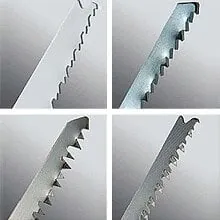
I have spent two decades fighting with cheap blades that wander mid-cut. You can buy a $300 Bosch or Festool jigsaw, but if you use the wrong blade, you will still end up with a jagged mess. Most people think all T-shank blades are equal. They aren't.
The material reality
Don't trust the color coding on the box. I once bought a pack of "clean cut" blades from a local supplier in 2014 that shredded 18mm birch plywood like it was wet cardboard. You need to match the tooth count to your specific stock thickness.
Fine teeth work for curves. A blade with 24 TPI (teeth per inch) stays straight when you are cutting through thick oak boards. It moves slowly. If you try to force a high-TPI blade through a heavy structural beam, the friction will heat the metal until it turns blue and loses its temper.
The teeth matter most. Use coarse blades for rough framing work.
Managing the wander
Blade deflection is the enemy of every woodworker. When you are cutting a deep radius in 25mm MDF, the blade wants to bend outward away from your line. This creates a bevel that ruins your joint.
Support your workpiece well. I always clamp a scrap piece of pine underneath my primary cut to provide extra lateral stability for the metal. It helps immensely. You can also slow down your orbital setting to reduce the vibration that causes this wandering behavior in thinner materials.
Watch your line closely. Speed kills accuracy here.
The heat factor
Friction is a silent killer of blade life. If you smell burning wood, your blade is likely dull or moving too fast for the material density. I noticed my old DeWalt blades would stop cutting entirely after just 12 minutes of continuous ripping through dense walnut.
Keep it cool. You can use a bit of beeswax on the blade to reduce drag during long cuts in hardwoods. It works well. If you see smoke, stop immediately and check the tension on your shoe.
Don't force the tool. Let the teeth do the work.
Choosing your brand
I have used everything from Milwaukee to generic hardware store brands. Most cheap blades use inferior steel that dulls after three or four cuts in medium-density fiberboard. You get what you pay for in terms of longevity and heat resistance.
Buy in bulk, but wisely. I keep a box of Bosch T101B blades in my workshop because they handle tight turns in plywood without snapping. They are reliable. Avoid the "no-name" packs found on discount sites if you actually care about your finish quality.
Stick to proven names. Your patience depends on it.
Frequently asked questions
How do I stop my blade from snapping?
Check your tension first. Most breaks happen because the user applies too much downward pressure while the blade is struggling through a knot in the wood. Ease off.
Can I use jigsaw blades for metal?
Yes, but you must change your approach. Use a blade with a very high tooth count and run your saw at its lowest possible speed setting to avoid melting the tip. It takes time.
Why does my cut look scorched?
Your teeth are likely dull or your feed rate is too slow. Move the saw steadily through the material instead of lingering in one spot for more than a second or two. Speed up slightly.
Frequently asked questions
How do I stop my blade from snapping?
Check your tension first. Most breaks happen because the user applies too much downward pressure while the blade is struggling through a knot in the wood. Ease off.
Can I use jigsaw blades for metal?
Yes, but you must change your approach. Use a blade with a very high tooth count and run your saw at its lowest possible speed setting to avoid melting the tip. It takes time.
Why does my cut look scorched?
Your teeth are likely dull or your feed rate is too slow. Move the saw steadily through the material instead of lingering in one spot for more than a second or two. Speed up slightly.